
September 28, 2025
Dear Stravera Capital LPs,
This month’s letter focuses on recession risk, PMIs, the new AI business cycle, and the Bitcoin market’s “temperature.”
The recent underperformance of Bitcoin relative to the Nasdaq has been disconcerting. By analyzing Bitcoin cycles in the context of the business cycle, the past nine months of underperformance become more understandable. With gold and equities breaking out, I’ll outline below why the trend remains positive. If I believed there were serious downside risks to the business cycle or particularly to BTC, I would be raising cash. In my view, the risks to holding cash right now far outweigh the downside possibilities; I see the probability of a Bitcoin rally extending through the end of the year as the more likely scenario.
Topics
- Employment & Inflation
- PMIs & Energy Demand
- Credit – Corporate Spreads & BTC Credit
- BTC Market Temperature & Gold
Employment & Inflation
The Fed is tasked with maximizing employment, maintaining low and stable inflation, and (often overlooked) keeping long-term interest rates moderate. Achieving the 2% inflation target has proven difficult. Notably, during the 2025 framework review, the Fed shifted from “Flexible Average Inflation Targeting” to “Flexible Inflation Targeting,” which now allows it to disregard average inflation trends and gives flexibility to lower rates to support employment.
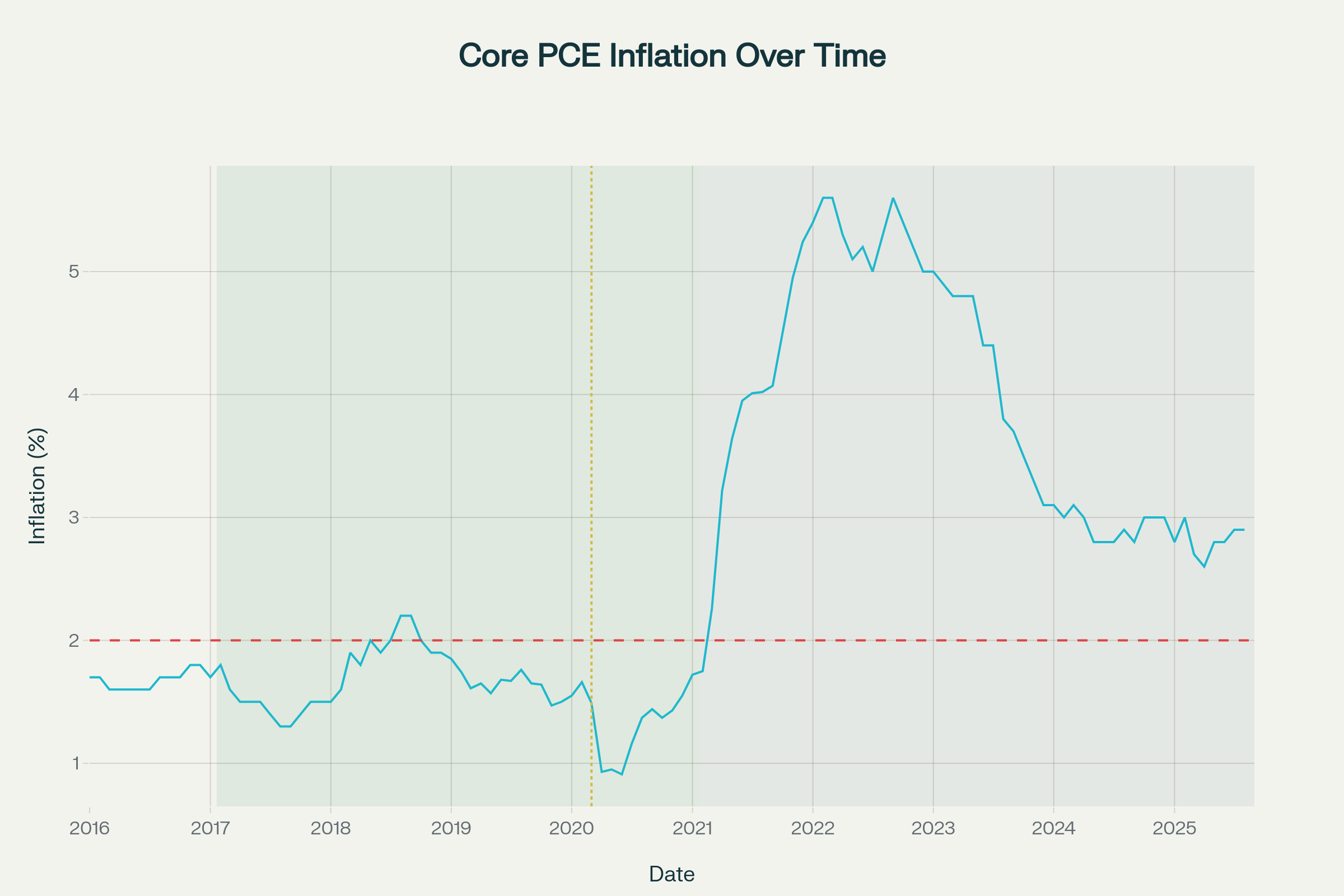
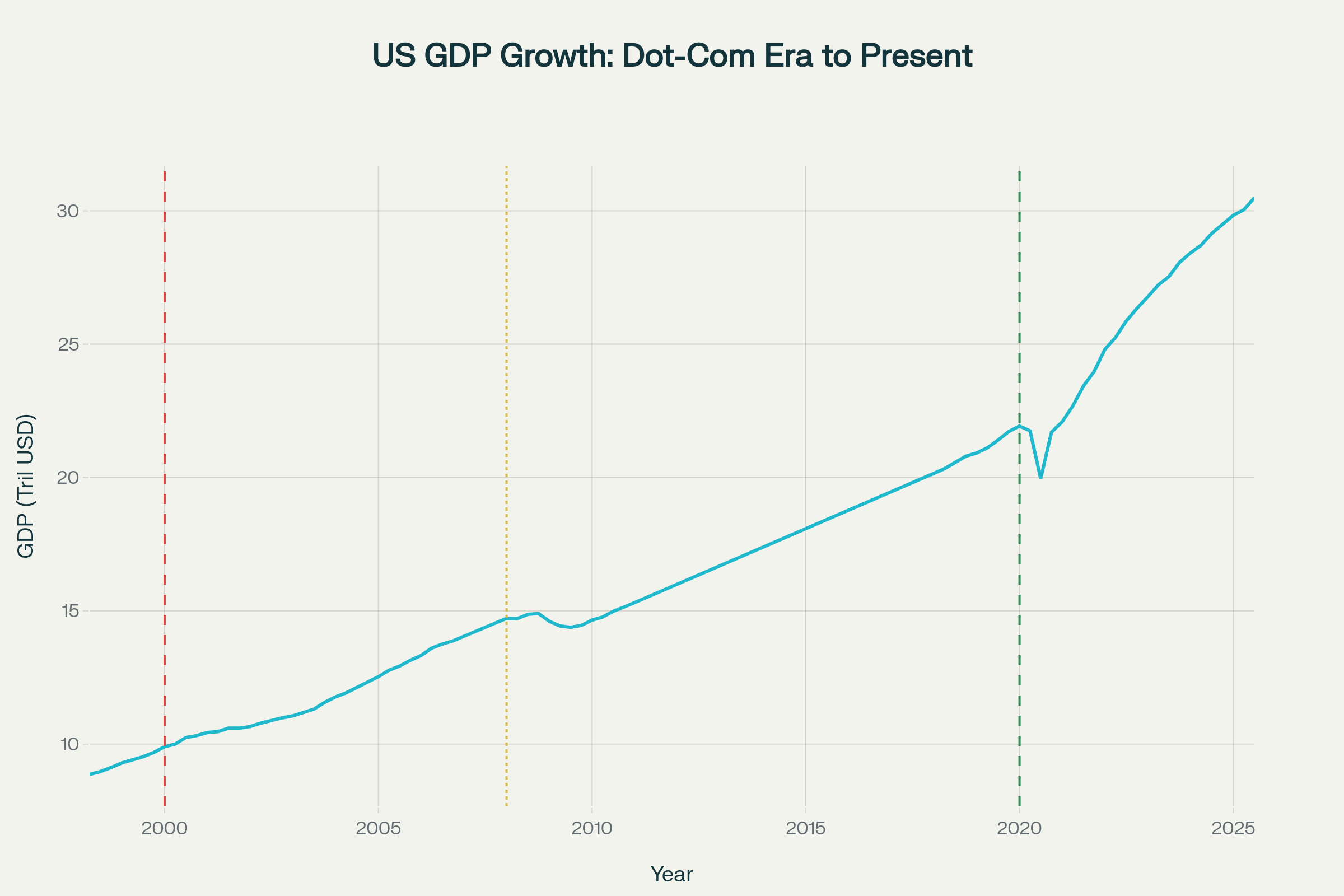
As Powell’s term as chair nears its close (May 15, 2026), it’s expected that Trump’s next Fed appointment will be highly dovish, as the administration seeks to weaken the dollar and “run the economy hot” to address the national debt crisis. As a result, inflation is likely to continue trending higher—not because of tariffs but due to policy decisions.
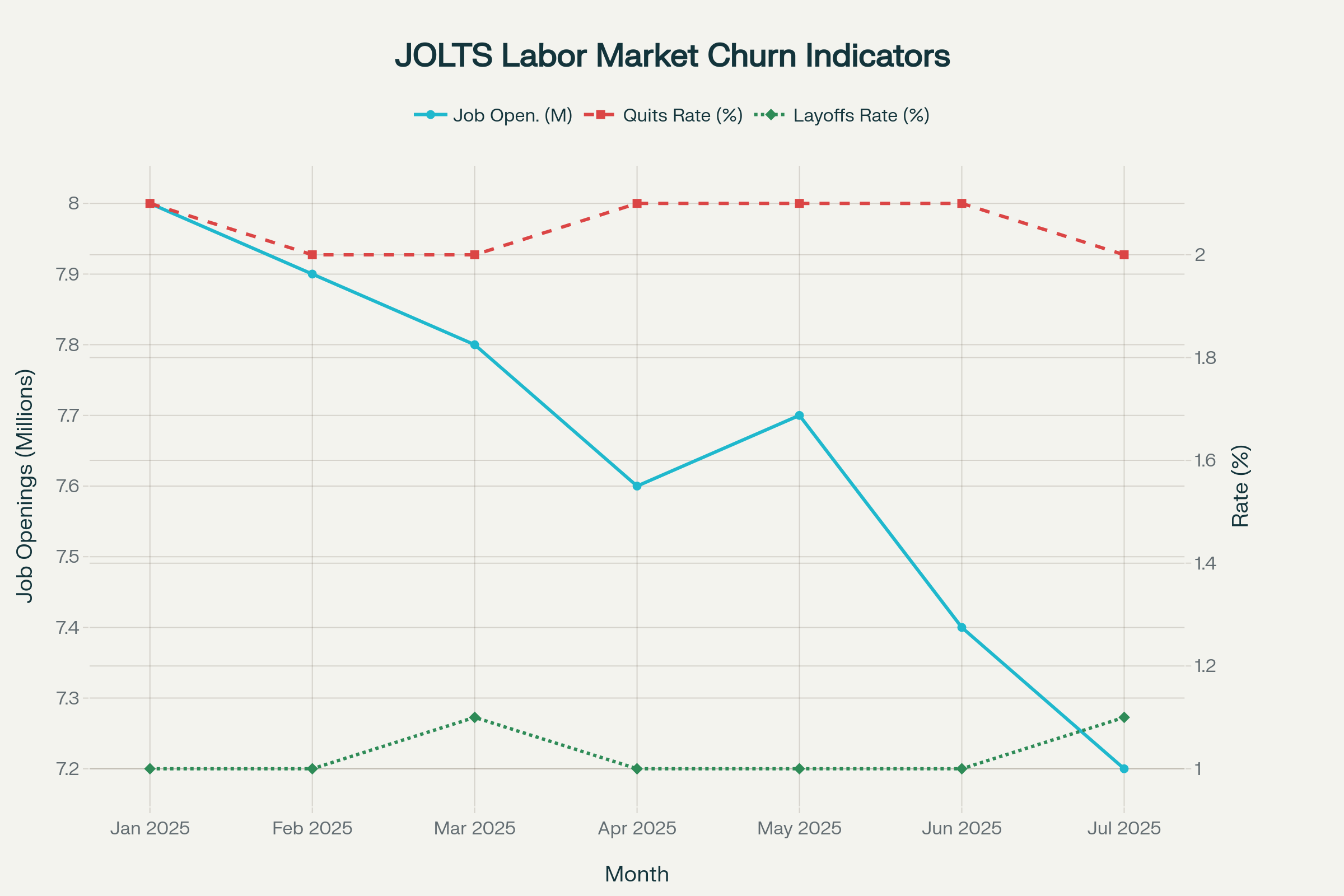
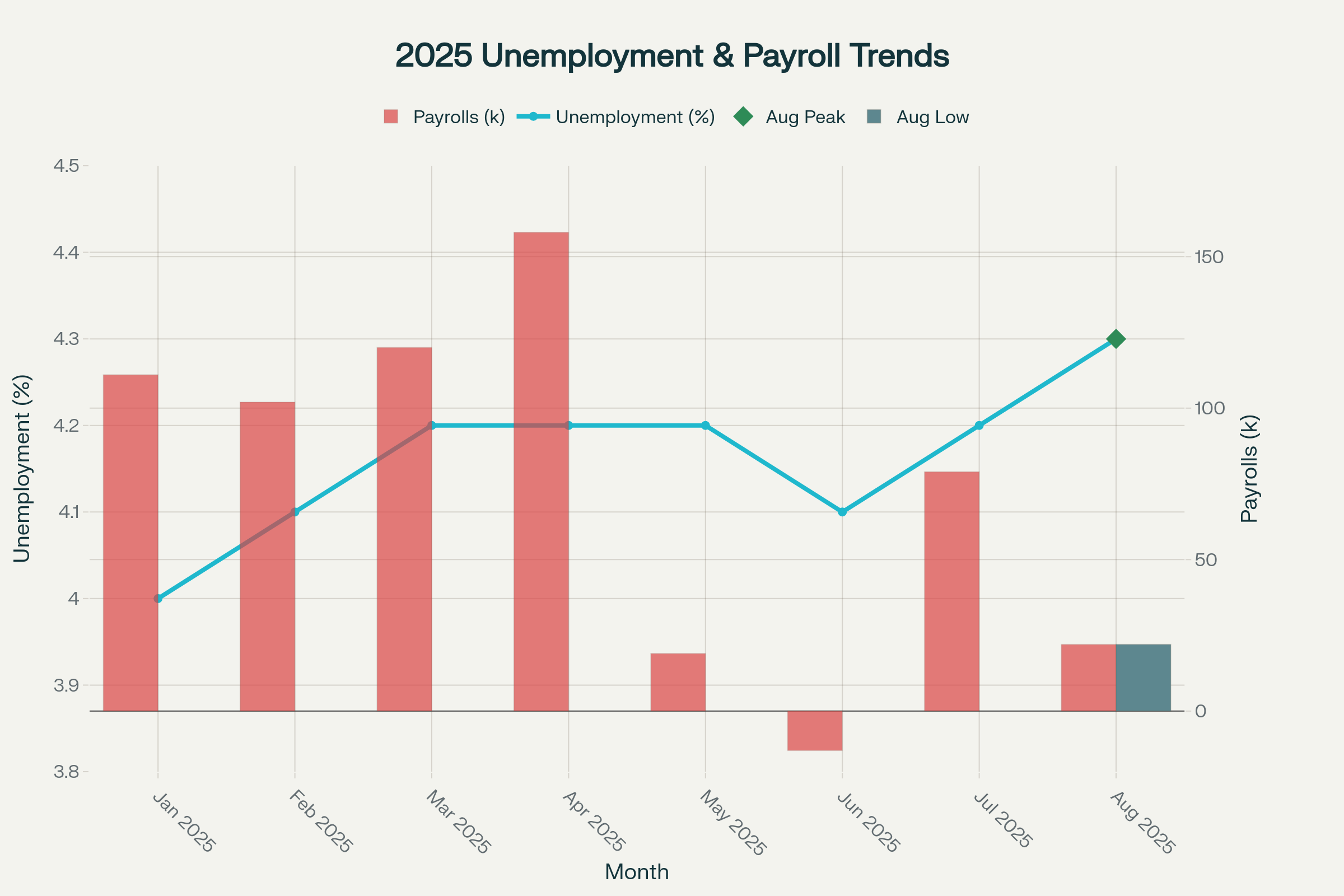
The labor market carries increased risk and uncertainty. Jordi Visser highlights the main danger: the shift from simply slower hiring to actual corporate layoffs. While nonfarm payrolls show that job growth has slowed over the past four months, there has yet to be a negative print. I am also closely watching the JOLTS labor market layoff rate. As long as this rate remains steady, mass firings aren’t a concern, suggesting we’re witnessing productivity gains from AI rather than broad job losses.
The most likely outcome is inflation trending higher, as the new Fed appointee maintains an aggressive stance on interest rates—potentially setting the stage for a blowoff top in BTC. If we see inflation above 4%, PMIs above 60, and interest rates in the low 3% range, those conditions would increase downside risks. Barring any black swan events, I believe the market will move in this direction over the next three months. This environment breeds liquidity and risk-taking, and we could quickly find ourselves in bubble territory.
I’ll also be monitoring CapEx trends and supply-side bottlenecks in chips and energy for the AI buildout. These pressures affect PMIs, but may also offer a leading indicator for when AI-driven spending rolls over—though that may take years.
PMIs & Energy Demand
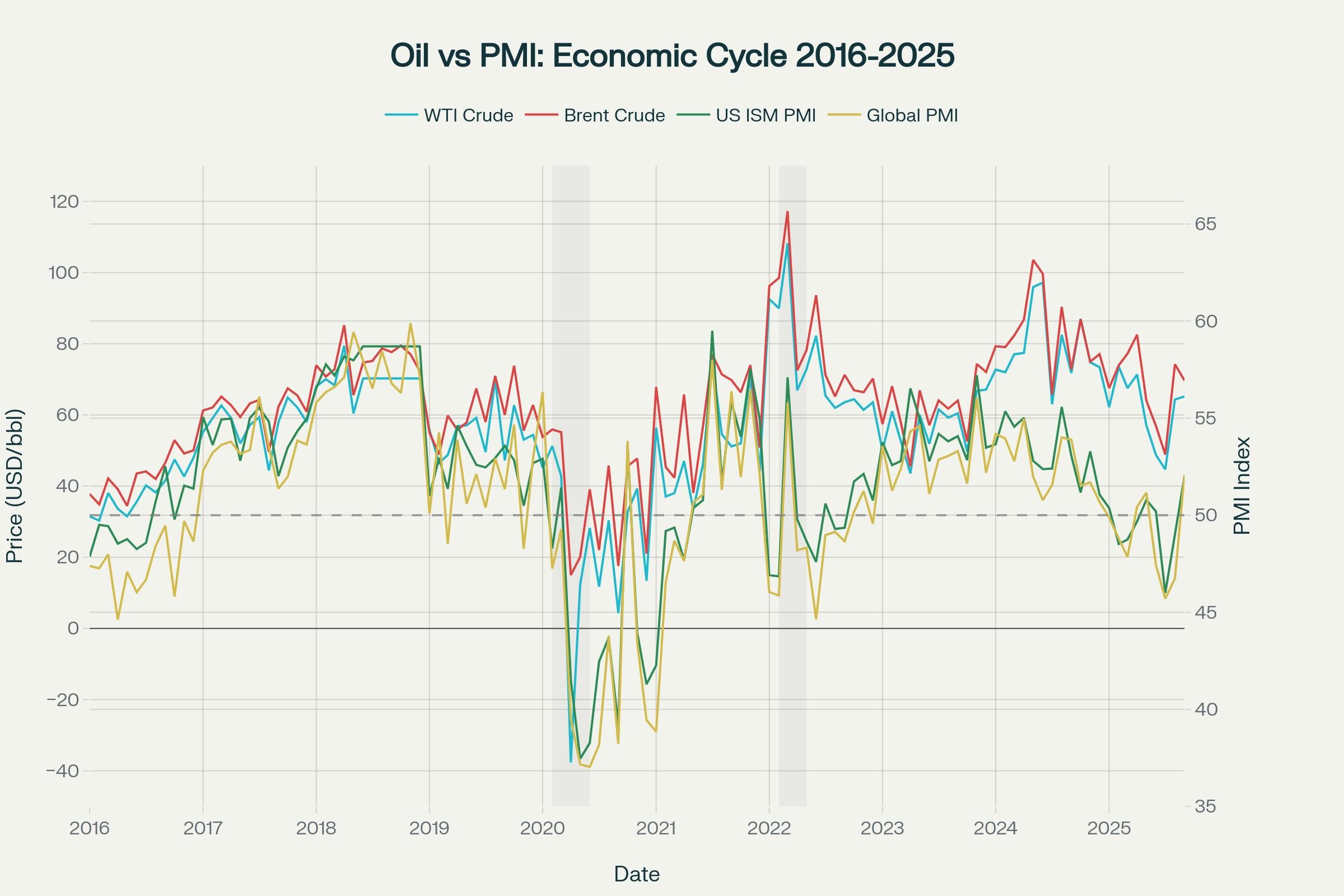
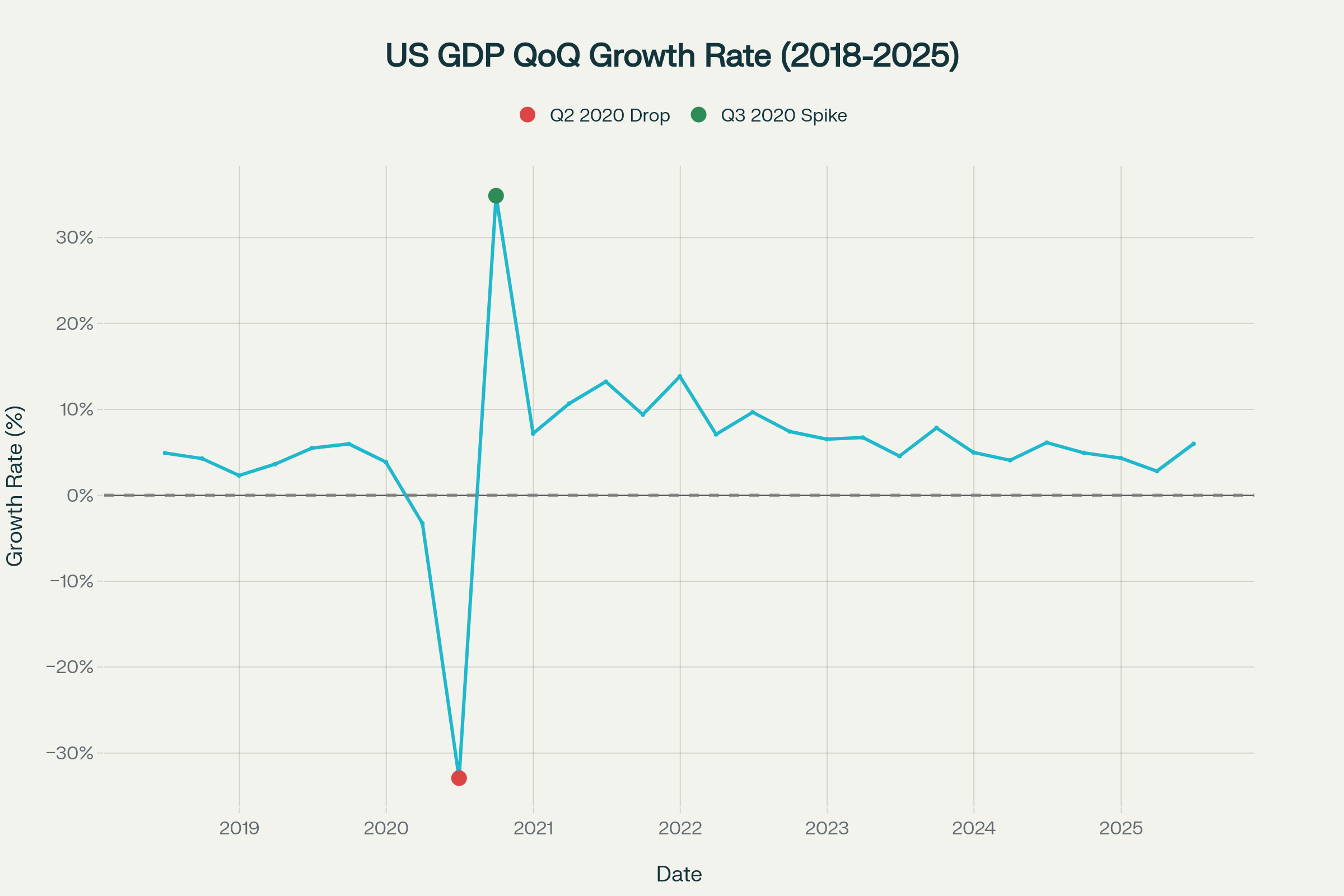
Recent US and global PMI data show we have finally broken above 50 definitively for the first time in 2025. As supply chain and energy bottlenecks become evident — especially for AI power needs — I expect this trend to continue.
Jensen Huang, on the recent Bg2 podcast, discussed NVIDIA’s “build to demand” strategy and how hyperscalers have consistently underforecast their compute needs. This has forced NVIDIA to increase manufacturing capacity toward year-end, escalating pressure along the hardware supply chain, including DRAM, PCBs, and resources for data centers such as constrained power and cooling. It’s no coincidence that PMIs are trending higher amid this year-end supply crunch, with inflation ticking up as a result of demand.
As mentioned earlier, we’re still far from critical zones for either inflation or PMIs. With the probability of a rate cut in October above 90% and a second cut by year-end at over 70%, there’s little reason to think the market won’t continue to “run hot” over the next three months.
Finally, if Bitcoin matters to Wall Street, asset managers—who have been steadily accumulating positions—will likely continue to buy aggressively before year-end to finalize allocations.
Credit – Corporate Spreads & Bitcoin Credit
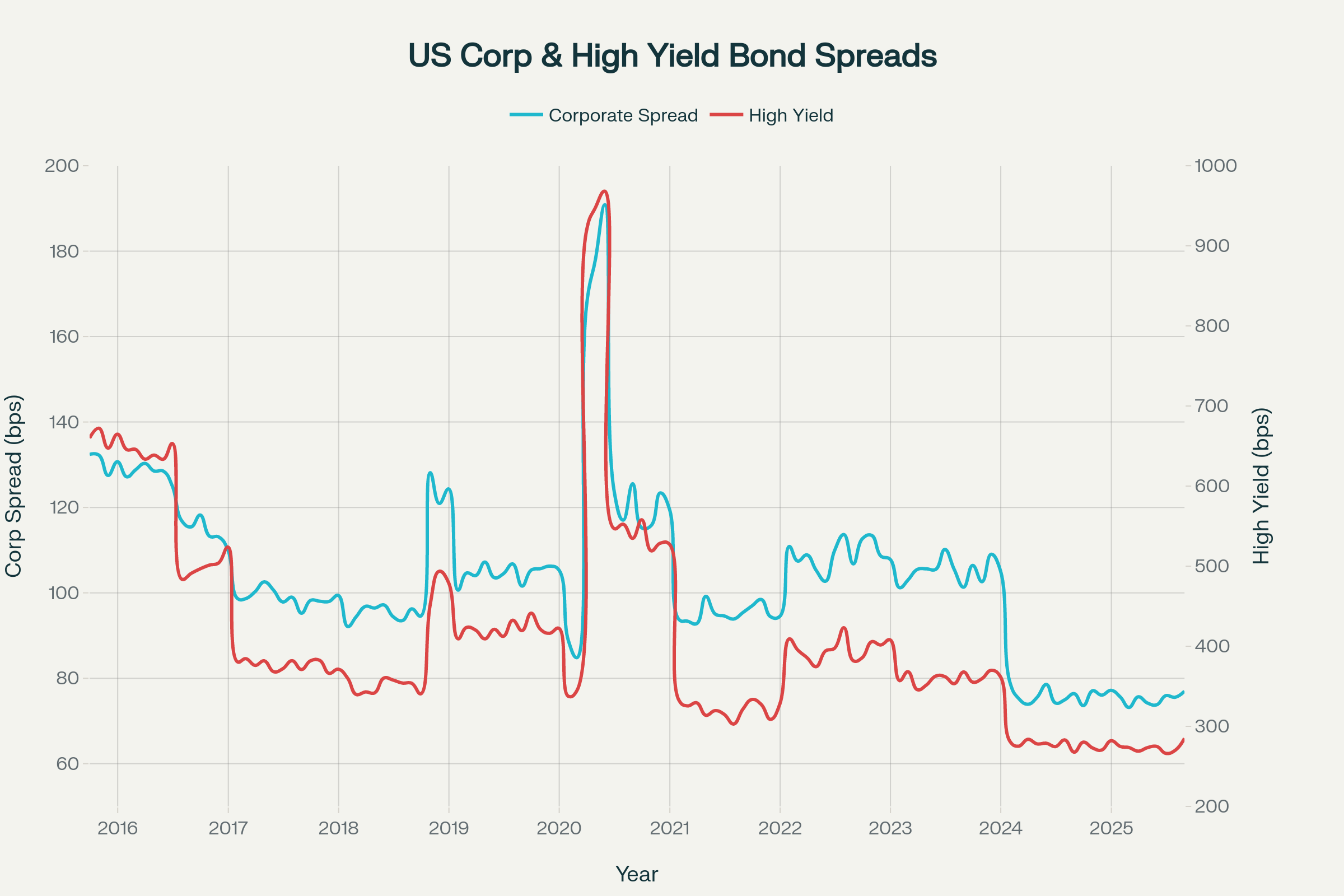
Credit spreads, the yield difference between bonds and the risk-free rate, are at all-time lows. Anyone familiar with Howard Marks knows this means capital is flowing freely, and it’s generally wise for investors to grow cautious when others are greedy. With overall equity valuations at historic highs, it’s difficult not to be concerned by the lack of risk aversion regarding duration and credit risk in the market. That said, as Marks reminds us, “while the music is playing, you’ve got to keep dancing.” This underscores why the inflation and AI demand picture is so important—especially since it’s estimated that 50% of S&P 500 earnings growth in late 2025 came from AI-related spending.
In terms of the Bitcoin credit market, spreads on Strategy’s preferred equity and BTCTC convertible notes remain extremely wide, upwards of 500 basis points in most cases. Furthermore, MNAV premiums continue to collapse across the treasury landscape. All of this is to say that while the traditional credit markets remain hot, the BTC credit market is quite cool at the moment.
BTC Market Temperature & Gold
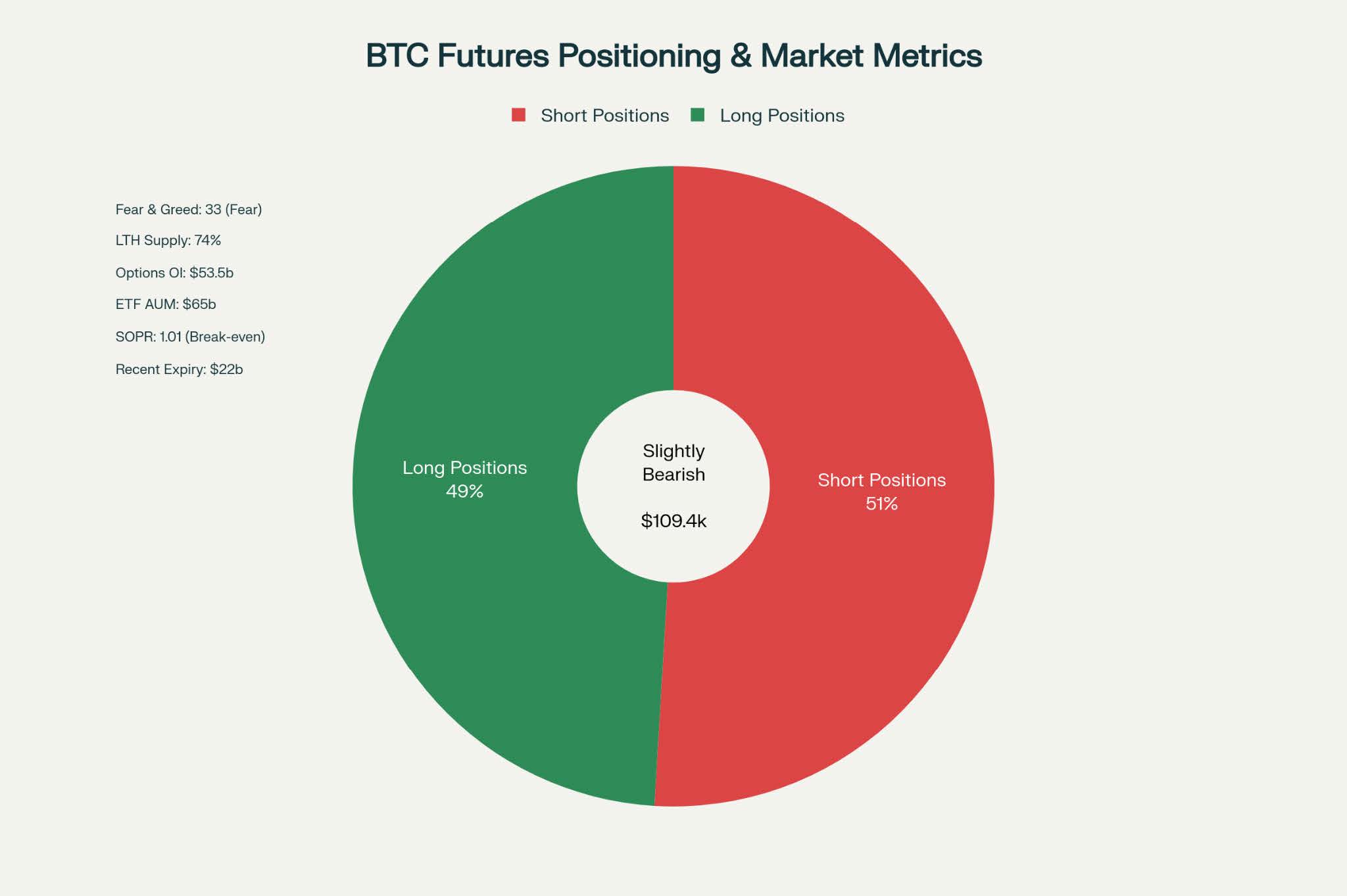
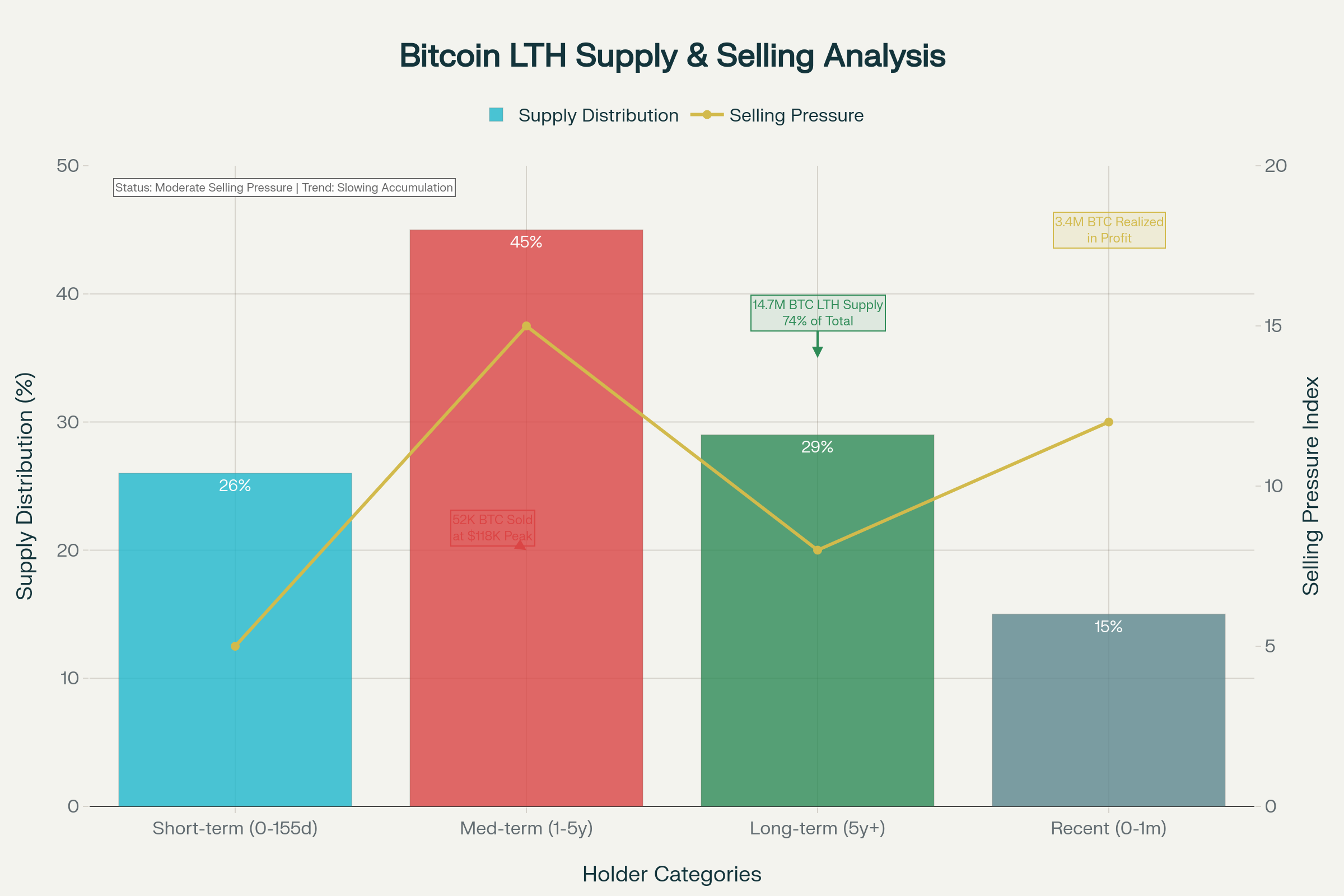
I am not currently applying leverage in the hedge fund simply because liquidity is peaking and positioning is largely neutral. Long-term holders continue to distribute coins, while allocators build long-term positions. In the near term, neutral positioning in the futures market, coupled with the CMC Fear Greed Index approaching “fear,” provides a case for selective short-term leverage.
One of the most compelling charts for Bitcoin bulls remains the BTC/GLD chart. Bitcoin is sitting just below the 2021 cycle high when priced in gold. I don’t expect Bitcoin to completely overtake gold’s role as a central bank monetary debasement hedge in the near term. Nevertheless, BTC/GLD will continue trending higher. For the time being, there seems to be room to run.
Bitcoin remains in a perpetual bull market, but liquidity and the business cycle will ultimately drive directionality over specific timeframes.
Sincerely,
Dan Hillery
Chief Investment
Officer Stravera Capital